

Boomerang casino Plinko
Introduction
Plinko looks almost disarmingly simple at first glance. You choose a stake, set a risk level, drop a ball, and watch it bounce through a field of pins until it lands in a payout slot. That surface simplicity is exactly why the format stands out. In a market crowded with cinematic video slots, layered bonus systems, and rule-heavy blackjack guide for Boomerang Casino accounts, Plinko strips the experience back to one visible event: the path of the ball and the multiplier at the bottom.
On the Boomerang casino Plinko page, that simplicity is the hook, but it is not the full story. In practice, Plinko is a game of pace, variance, and perception. It can feel calm for several rounds and then suddenly become tense because one setting change alters the whole session profile. I find that this is where many players misread it. They see a straightforward interface and assume the experience will be casual and predictable. In reality, the chosen risk mode and board configuration can make Plinko either a low-intensity drip of small returns or a sharp, swing-heavy format where long dry spells are part of the design.
This is why Plinko deserves a proper breakdown rather than a passing mention as a trendy casino game. If a player wants to understand whether it is worth trying at Boomerang casino, the right question is not just “how does it work?” but “what does this setup actually feel like over a real session?” That is the question I will focus on here.
What Plinko is and why it draws so much attention
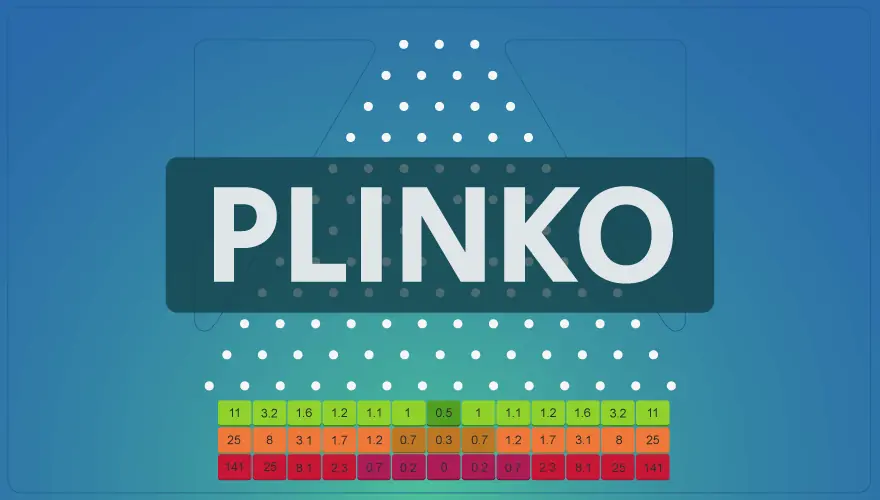
Plinko is a chance-based casino game built around a vertical board filled with pegs. A ball is released from the top and deflects left or right as it hits each peg. By the time it reaches the bottom, it lands in one of several slots, each tied to a multiplier. The center usually contains lower multipliers, while the outer edges tend to hold the biggest rewards and, naturally, the least frequent outcomes. Players who value quick withdrawals will find real timings in Aviator crash game guide.
The reason players notice Plinko so quickly is that it turns randomness into something visual. A slot spin hides the internal calculation behind reels and symbols. Plinko puts the event in front of you. You can follow the ball, anticipate its direction, and react in real time as it appears to drift toward a low or high multiplier. That visible descent creates involvement even though the result is still governed by random number generation.
Another reason for its rise is session rhythm. A standard round resolves quickly, and there is very little downtime between decisions. You are not waiting through long animations, bonus intros, or feature sequences. For some players, that makes Plinko feel cleaner and more transparent than many modern slots. For others, it creates a faster cycle of expectation and disappointment. Both reactions are valid, and both come from the same design choice.
One observation I keep coming back to is this: Plinko often feels more “honest” to players because the game does not pretend to be a story. There are no characters, no expanding wilds, no fake sense that you are building toward a narrative climax. It is just stake, drop, bounce, result. That directness is a major part of its appeal.
How the Plinko system actually works at session level
To understand Boomerang casino Plinko properly, it helps to separate the visible action from the underlying logic. The visible action is the ball moving through the peg field. The underlying logic is the probability model that determines how often the ball ends in low, medium, or high multiplier zones. The board creates the illusion of endless path variation, but the important thing for the player is the payout distribution attached to that board setup.
Most Plinko versions include several core controls:
Bet size — the amount staked on each drop.
Risk level — usually low, medium, or high, affecting the payout spread.
Rows or board height — in some versions, the number of rows changes how many deflections occur before the ball reaches the bottom.
Manual or auto mode — useful for players who want either direct control or a more continuous session flow.
The most important of these is risk level. It changes the profile of outcomes. On low risk, the board is usually flatter. You will see more frequent small multipliers and fewer dramatic swings. On high risk, the center often becomes less forgiving while the edge multipliers become much larger. That means the session can go quiet for longer and then spike hard on a rare hit.
Rows matter as well, because they affect the number of directional changes the ball can make. More rows generally create a wider spread of possible landing points and can increase the feeling of suspense, especially when paired with a high-risk setup. But more rows do not automatically mean better value. What matters is how the payout table is structured around that board.
| Setting | What it changes | What it means in practice |
|---|---|---|
| Bet size | Absolute exposure per drop | Directly affects bankroll pressure during fast sessions |
| Low risk | Narrower payout spread | More stable rhythm, fewer sharp peaks |
| Medium risk | Balanced distribution | Mix of modest returns and occasional stronger outcomes |
| High risk | Wider payout spread | Longer losing stretches become more likely, but top multipliers are higher |
| More rows | Longer path to the bottom | Greater visual tension and often a more extreme board profile |
That is why broad statements about whether Plinko is calm or aggressive often miss the point. Here is the practical takeaway: the “same” Plinko game can feel completely different depending on how you configure it. It can be either.
Why the game feels engaging and how the pace affects decisions
Plinko creates interest through a combination of short rounds and visible suspense. Each drop resolves quickly, but not instantly. There is a small window where the ball is still in motion and the outcome feels undecided. That window is crucial. It is where anticipation lives.
In classic slots, suspense often comes from reels slowing down or bonus symbols appearing. In Plinko, suspense is geometric. You are watching the ball flirt with one lane, then another, and each tiny deflection seems meaningful. Even experienced players can feel drawn into this visual drama, despite knowing that the final result is random.
The pace matters because it shapes bankroll behaviour. A fast game with one-click repetition can burn through funds more quickly than players expect, especially in auto mode. This is one of the most important points to understand before launching Boomerang casino Plinko. The interface looks minimal, but the session can move at a speed closer to rapid-fire betting than to a relaxed slot session with long animations.
A second observation worth noting: Plinko often feels less repetitive than it really is. The outcomes may be routine for long stretches, but the path of the ball gives each round a unique visual identity. That keeps players engaged even when the actual payout pattern is not especially generous. In other words, the movement disguises repetition better than many reel-based products do.
How risky Plinko really is and who tends to enjoy it
Plinko is not inherently a high-risk game in every configuration, but it can become one very quickly. The key is that players are often given direct control over the variance profile. That is unusual compared with many slots, where volatility is fixed by the developer and only needs to be inferred from behaviour over time.
In Plinko, the chosen risk setting is not a cosmetic option. It is the central decision. Low-risk boards are more suitable for players who want longer sessions, smaller fluctuations, and a clearer sense of rhythm. High-risk boards are for players who accept that many drops may return little or nothing meaningful while a rare edge result carries the whole appeal.
That makes Plinko suitable for:
players who like short, direct rounds;
players who prefer visible randomness over reel animations;
players who want some control over session intensity through settings;
players comfortable with variance and streaky outcomes.
It may be a poor fit for:
players who enjoy feature-rich slots with bonus rounds and layered mechanics;
players who expect sustained entertainment from theme, soundtrack, or progression;
players who chase consistency but are tempted to switch to high risk too quickly;
players who find repeated low-value results frustrating.
One of the more misleading ideas around Plinko is that a visible ball path makes the game feel controllable. It does not. You may choose where to drop the ball in some versions, and you may adjust the board settings, but you are not steering the outcome in a skill-based sense. The game can feel interactive without offering true control over results.
What players should understand about probabilities and possible outcomes
The core probability principle in Plinko is simple: the largest multipliers are placed where the ball is least likely to land. The central slots are usually hit more often because many possible paths converge there, while the extreme edges are statistically rarer. This mirrors the familiar bell-curve logic behind the format.
That does not mean every session will look balanced or mathematically neat. Random distribution over short play periods can be uneven. A player may hit a strong multiplier early, then see a long sequence of weak landings. Another player may get the opposite experience. This is where expectation management matters.
Before playing, I would keep four practical points in mind:
Short sessions can be deceptive. A few good drops do not mean the setup is generous, and a rough start does not prove the board is “cold.”
High multipliers are not a steady income stream. They are rare events built into the edge of the distribution.
Fast repetition amplifies swings. Even modest stakes can add up quickly when rounds resolve in seconds.
Changing risk level changes the session profile, not just the mood. It is effectively choosing a different payout landscape.
For players at Boomerang casino, this means the smartest approach is to decide on a session style before starting. If the goal is to test the format and understand its flow, low or medium risk makes more sense than jumping straight to high variance because the top multiplier looks tempting.
How Plinko differs from slots and other casino favourites
Plinko sits in an unusual position between instant games and traditional casino entertainment. It shares some DNA with slots because outcomes are random and multipliers define the return. But the user experience is very different.
Slots are built around symbol combinations, paylines, cluster systems, cascading reels, and bonus features. Their appeal often comes from escalation: scatter teases, free spins, expanding symbols, multipliers inside bonus rounds. Plinko removes almost all of that. There is no layered feature ladder. Every round is self-contained.
Compared with roulette, Plinko also feels different. Roulette gives a fixed wheel and a broad betting map before the spin. Plinko gives a changing visual path after the stake is placed. Compared with best crash games information for Boomerang Casino players, Plinko is less about deciding when to cash out and more about accepting a completed random event. Compared with blackjack, there is no strategic decision-making once the drop begins.
| Format | Main source of tension | Player involvement | Session feel |
|---|---|---|---|
| Plinko | Ball path and landing slot | Settings-based, not skill-based | Fast, visual, swing-sensitive |
| Classic slots | Reels, symbols, bonus triggers | Low direct control | Theme-driven, feature-heavy |
| Roulette | Wheel result after bet placement | Choice in bet structure | Structured and familiar |
| Crash games | Cash-out timing | Decision under pressure | Reactive and nerve-based |
The practical difference is this: Plinko offers immediacy without much narrative decoration. If you want a clean, quick casino game where the random event is easy to follow, it has a strong case. If you want layered features, evolving rounds, or strategic depth, other formats will usually serve you better.
Practical strengths and the weaker points players notice over time
Plinko has several clear advantages. First, it is easy to understand. A new player does not need to learn paylines, side bets, card values, or feature rules. Second, the game is highly readable. You can see what is happening and why the result feels exciting. Third, its adjustable risk settings let players shape the tone of the session more directly than in many slots.
At Boomerang casino, that makes Plinko a strong option for players who want a direct format without unnecessary friction. You can get into the session quickly and understand the effect of your settings almost immediately.
Still, the weaker points become noticeable with longer play. The simplicity that makes Plinko accessible can also make it feel thin. There is limited progression. No hidden depth emerges after an hour. If the visual drop itself does not keep you engaged, the experience may flatten out quickly.
Another issue is perception versus reality. Because the ball visibly bounces around the board, some players feel each near-edge run is “almost” a huge hit. In practice, near misses have no predictive value. The path can create emotional momentum that is not supported by any underlying shift in probability. This is one of the format’s most subtle traps.
A third point is session speed. Plinko can be gentle on the interface but harsh on discipline. Minimalism often lowers a player’s guard. Without long spin sequences or complex menus, it is easy to place far more drops than intended.
What to check before launching Boomerang casino Plinko
Before starting a session, I would focus on a few practical checks rather than treating Plinko as a casual click-and-watch diversion.
Look at the risk setting first. This is the main factor shaping your session.
Understand the multiplier layout. Do not fixate on the top number alone; note how much of the board is occupied by low returns.
Set a stake that matches the speed of play. A bet that feels small in a slot can become expensive in a rapid Plinko run.
Be careful with auto mode. It is convenient, but it can detach you from the pace of spending.
Use demo play if available. It helps you understand the rhythm without reading too much into short-term results.
I would also suggest deciding in advance what kind of experience you want. If you are testing the format, medium settings usually reveal more about the game than extreme ones. If you go straight to high risk, you may end up judging Plinko entirely by a rough streak that was always built into the setup.
That is perhaps the most important practical lesson here: Plinko is simple to start, but not always simple to evaluate. A player’s impression of the game can change dramatically depending on whether they approached it as a quick visual diversion, a high-variance chase, or a measured low-risk session.
Final verdict
Boomerang casino Plinko offers a very specific kind of casino experience. It is quick, visual, and mechanically transparent on the surface, yet capable of producing very different session dynamics depending on the chosen risk level and board setup. That contrast is the heart of the game. It looks easy, but the real experience can range from steady and modest to sharp and highly uneven.
Its strongest qualities are clarity, pace, and immediacy. You do not need to decode a paytable full of special symbols or wait for a bonus round to feel engaged. The tension is right there in the ball’s descent. For players who like direct formats and visible randomness, that is a genuine advantage.
The caution points are just as real. Fast rounds can accelerate spending, high-risk settings can produce long unproductive stretches, and the visual path can create a false sense that outcomes are almost within reach or somehow readable. They are not. Plinko remains a random game, even when it feels unusually tangible.
So, is it worth trying? For the right player, yes. If you want a streamlined alternative to classic slots, and you appreciate being able to shape the session style through risk settings, Plinko has real appeal. If you prefer rich themes, deeper feature design, or a stronger sense of progression, it may feel too bare after the novelty fades. In short, Plinko does one thing well: it turns probability into a visible event. Whether that is compelling or limited depends entirely on what you want from your casino session.
FAQ
What should be checked before placing the first Plinko ball?
Choose the bet amount and confirm the selected mode, demo or real-money play. Make sure the multiplier display updates correctly before launching the ball.
How does Plinko scoring work when the ball lands into a payout slot?
Each ball travels through pegs and drops into a numbered payout area. The position it lands on determines the multiplier applied to the stake shown for the round. Real-money play uses the same mechanics, but results affect balance.
Is Plinko available in demo mode and real-money mode?
Yes. Demo mode is for practice without affecting the account balance, while real-money play applies results to the current funds.
When starting a real-money Plinko round, which account action may be required at login?
A casino login is needed so the game can connect to the account session. If a session is active, placing a bet and launching a ball should proceed in seconds. If login is missing or expired, the game may pause until account access is restored.
How can players tell whether they are in the demo mode or real-money play before launching?
The mode indicator on the game interface should show demo or real-money play. The stake and result handling also differ: demo outcomes do not change the balance. If anything looks inconsistent, return to the lobby and re-check the selected mode.
What common beginner mistake can stop a Plinko round from starting smoothly?
Betting too quickly during a slow page load can cause the stake selection to lag behind the interface. Wait for the bet area to confirm before launching the ball. Refreshing the game view can help if the round controls remain unresponsive.
How is this Plinko page different from other casino game sections like slots or live casino tables?
Plinko uses a ball-drop mechanic with pegs and immediate multiplier results, instead of reel spin cycles. Live casino tables involve a dealer stream and table interaction, while Plinko is typically faster to launch within the game lobby. The pace is usually higher, so watching the multiplier area before each drop helps.
If Plinko does not load after login, what should be checked first?
Confirm that the casino session is still active and that the game lobby connection is functioning. Try switching to a working mirror if the table stays blank. Clearing the page cache or restarting the game widget can also fix stalled loading.
What should returning players check in their account before continuing Plinko real-money play?
Re-check the selected mode and current stake after login, since session refresh can reset interface selections. If deposit or withdrawal status changed recently, ensure the balance reflects the latest updates before betting. Any restrictions in the account should appear in the cashier or account notifications.
What is the fastest step to start a Plinko ball on Boomerang?
Open the Plinko table, set the stake, choose demo or real-money play, then press the launch button to drop the ball. If the table opens slowly, switching to a working mirror can speed up access. After the ball lands, the multiplier result is shown immediately so the next round can be started.